

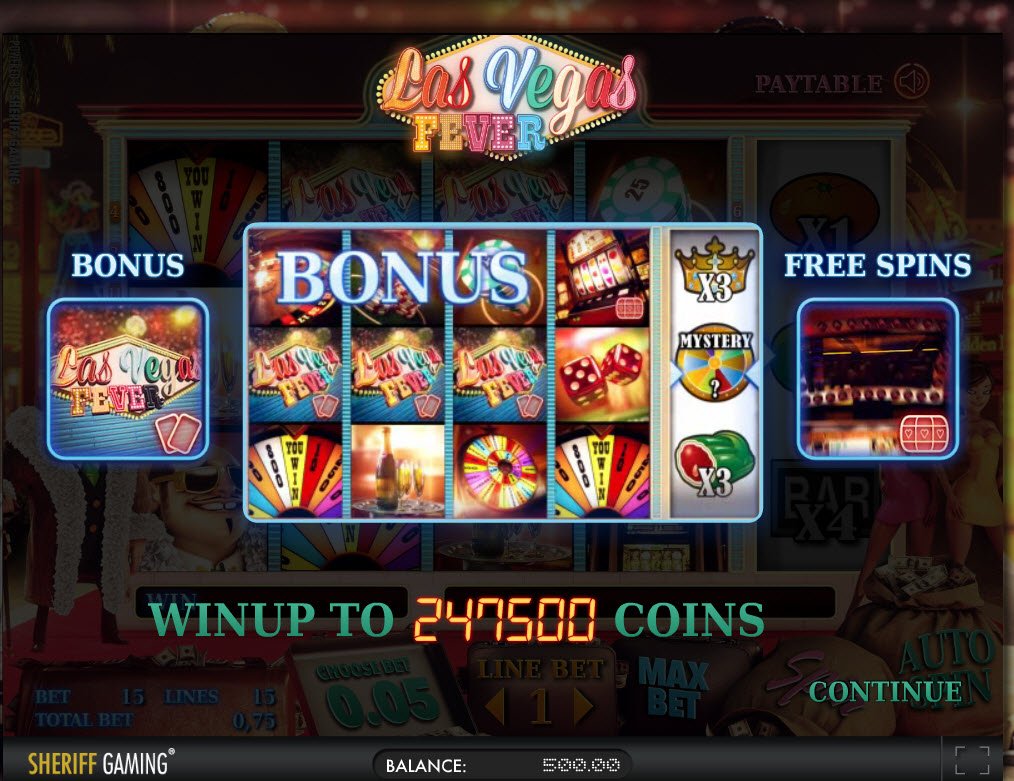
We have rolled out a thorough privacy overhaul at Zulacasino, and we want to walk you through every meaningful update. Canadian players have been asking for sharper management over personal data, clearer consent pathways, and tools that genuinely let you choose how your information moves through our platform. We heeded carefully, and what follows is no a minor modification buried in a terms-of-service update nobody reads. It is a redesigned privacy architecture that impacts account creation, payment verification, session monitoring, marketing options, and responsible gaming protections. Our development team spent numerous months stress-testing these features against real-world scenarios because we trust privacy is no a check mark. It is a constant practice. When you spin the reels on a Friday night or settle into a long blackjack session on a quiet Sunday, your data should work for you and nobody else. The upgrades we are detailing here offer you granular insight, straightforward toggle settings, and the certainty that Zula Casino handles your personal information with the seriousness it deserves.
Grasping the New Privacy Controls
When we mention privacy controls, we refer to something highly defined. We are talking about a focused dashboard inside your account settings that lets you view exactly what data categories we hold, their retention period, and the processing activities are presently active on your profile. This was not always available to players in the past, and we accept full responsibility for that gap. Now, every registered user at Zula Casino can visit the privacy centre and see a real-time snapshot of their data footprint. You can see entries for identity verification documents, payment method tokens, session logs, device fingerprints, and communication preferences. Each entry has a status label that tells you whether the data is actively utilized, pending automatic deletion, or kept only because of a legal obligation we must honour. We also created a plain-language explainer next to each category so you don’t need to decode legal jargon to comprehend why something is stored. This dashboard refreshes in real time, which means if you revoke a consent or delete a stored payment method, the change records immediately across our backend systems. No delays, no hidden propagation windows. Our team is sincerely proud of the transparency this offers to everyday account management, and we know it sets a new expectation for how gaming platforms should interact with the people who trust them.
Safe Gambling Tools with Privacy at the Center
Confidential by Default: Boundaries, Time-Outs, and Account Closure
Player protection features often require collecting confidential behavioural data, which creates an uncomfortable tension between player protection and privacy. We resolved that tension by rebuilding our responsible gaming tools to operate on-device and inside your account boundary without sending behavioural insights to external systems. When you establish a deposit limit, a loss cap, or a session time restriction, the enforcement logic runs against encrypted account metadata that our own marketing and analytics teams cannot query. Your limit thresholds are held in a segregated database that only the responsible gaming enforcement engine can read, and access to that database requires dual authorization from our compliance lead and an independent monitoring officer. This means your spending boundaries remain confidential even within our organization. The same privacy-by-design principle applies to time-outs and self-exclusion periods. When you initiate a cooling-off period, the system records only the start and end timestamps, not the reason you initiated it or the gameplay activity that preceded the decision. We believe this separation is vital because it removes any hesitation a player might feel about using protective tools out of concern that the data could later influence their account standing, bonus eligibility, or customer support interactions.
Information Separation for Play History and Behavioural Patterns
We extended the isolation architecture to include play history records that responsible gaming algorithms utilize to detect potential harm indicators. Our monitoring system searches for patterns such as rapid deposit escalation, late-night session frequency shifts, or prolonged loss-chasing behaviour, but it does so inside a sandboxed environment that outputs only a risk flag with no accompanying granular data. The flag is a simple yes/no or no indicator that prompts a supportive in-app message recommending available tools, without showing to any human agent or marketing system what specifically generated the flag. This approach preserves the effectiveness of early intervention while ensuring that your detailed play patterns remain private and are never stitched into a profile used for advertising segmentation or customer lifetime value calculations. Canadian players have consistently told us through surveys and feedback channels that privacy concerns were a barrier to using responsible gaming features, and we developed this isolation model specifically to eliminate that barrier. Early data from our launch period shows a measurable uptick in voluntary limit-setting since the privacy enhancements went live, which tells us the approach is functioning as intended.
Improved Access Control and Access Warnings
Account safety and confidentiality are tightly linked, because an unauthorized login is the fastest route to a privacy breach. We improved our session management tools to give you full visibility into every current session on your Zula Casino account. The session dashboard now displays the hardware type, web browser, approximate location based on IP positioning, and the precise time the session began. If you spot a session you do not identify, you can end it from anywhere with a one click, and that closure forces a password change on the next login attempt from that hardware. We also introduced real-time login alerts provided through your preference of email, SMS, or an application-based push notification. These alerts trigger the moment a unrecognized machine or browser successfully authenticates against your account information, offering you an quick ability to take action if the login was not your own. Additionally, we added a feature called device trust assignment, where you can designate specific devices as reliable, and any login attempt from an untrusted device prompts a compulsory two-factor authentication challenge even if you have not enabled 2FA globally. All of these login control improvements work on-site on our servers, signifying the data about your machines and login patterns never leaves Zula Casino’s secure environment for data analysis or profiling purposes.
Profile Verification Receives a Privacy-First Improvement
Reduced Data Collection During KYC
Customer identification checks are required in regulated gaming markets, but mandatory does not have to mean invasive. We have reworked our verification flow to demand only the minimum set of documents required by our licensing commitments. For most Canadian customers, that means one government-issued photo ID and, when necessary for payment matching, a recent utility document or bank letter with sensitive fields partially masked before upload. Our system now actively prompts you to hide information that is not relevant to the verification procedure, such as account funds, transaction histories, or identification numbers belonging to other household members. We also introduced an automated document purging timeline. Once your identity is authenticated and the verification timestamp is logged for adherence, the uploaded files are eliminated from active storage within fourteen calendar days and transferred to a hardened, access-restricted storage that only our compliance manager can query under strictly audited parameters. This marks a significant departure from the industry practice of retaining full document copies indefinitely. We see no reason to hold onto beyond what regulations strictly demand, and the new flow reflects that philosophy at every stage.
Data Encryption and Access Restrictions
Beyond minimizing what we obtain, we reinforced how verification data travels through our infrastructure. All document uploads are encrypted client-side before they depart your browser, using AES-256 encryption with keys that refresh every twelve hours. Once the encrypted package hits our servers, it is divided across three separate storage partitions, none of which include a complete readable file on its own. Even our own engineering staff cannot reassemble a submitted document without activating a multi-party access request that produces an immutable audit trail entry. We mention this not to dazzle with technical jargon but to be clear about the lengths we go to so that your passport scan or driver’s license image never develops into a liability. Canadian privacy law sets a high bar, and we crafted these systems to exceed it rather than merely comply. The access boundaries extend to customer support interactions as well. When you approach our help desk regarding a verification issue, the agent sees only a status code and a list of missing requirements, never the underlying document content. This separation ensures that human error in a support conversation cannot expose sensitive imagery or personal details.
Granular Data Sharing Preferences
Opt-In vs. Opt-Out: You Decide What Gets Shared
We have completely overhauled the consent model that controls how Zula Casino communicates with third-party services. Previously, certain data-sharing arrangements were packaged under broad agreements that made it hard to distinguish essential platform functions from marketing analytics or affiliate tracking. That model is a thing of the past. In its place, we created a preference panel with separate toggles for every specific data-sharing purpose. You can permit your gameplay statistics to feed into our game recommendation engine while concurrently blocking any sharing of that same data with external advertising networks. You can authorize your payment processor to retain a token for faster deposits without granting permission for that token to be used in cross-promotional campaigns. Each toggle is accompanied by a short summary of who obtains the data, what they do with it, and how withdrawing consent affects your experience. We made a deliberate choice to set all non-essential sharing toggles to off by default for new accounts, and we retroactively applied that default to existing Canadian player profiles in early March. If you want personalized offers or tailored game suggestions, you can switch those features on with a single tap, but the decision starts with you rather than with us assuming consent.
Third-Party Audit and Compliance Reporting
Transparency in the absence of verification represents good marketing, so we engaged an independent privacy auditing firm to confirm our data-sharing claims. Every quarter, the auditor reviews our consent logs, data flow diagrams, and third-party contracts to confirm that what we describe in the preference panel matches what actually takes place in production. The resulting report is posted in our privacy centre, redacted only of commercially sensitive vendor pricing details. We are among the few online casinos serving the Canadian market that pledges to this level of external scrutiny on data practices. If the audit discovers a discrepancy, we pledge to rectifying it within thirty days and informing affected https://data-api.marketindex.com.au/api/v1/announcements/XASX:ALL:2A859543/pdf/inline/2015-half-year-media-release players directly through their account notification preferences. So far, two audit cycles have been carried out since the new controls were introduced, and both produced clean findings with no unauthorized data sharing detected. We share this not to celebrate but to set a baseline of accountability that players can follow over time. Trust is cultivated in increments, and independent verification gives those increments weight.
What These Updates Signify for Canadian Players
Canadian users function within a regulatory environment shaped by PIPEDA and provincial privacy laws that increasingly demand meaningful consent and data reduction. Our updates directly match those requirements, but we would like to highlight that the advantages extend far beyond compliance formalities. When you log into Zula Casino today, you experience a gaming environment that views your personal data as a loan rather than an asset. That change in mindset alters daily experiences. A withdrawal request ceases to trigger a chain of needless document resubmissions because our system retains that your identification was already authenticated and adheres to the removal schedule we pledged. A customer service interaction about a failed deposit does not disclose your full payment instrument history to the agent because data tokenization and access restrictions control what is visible. Even something as basic as navigating the game lobby appears changed when you are aware your session information is not being transmitted to a number of outside trackers. We committed to these updates because we are convinced confidentiality is emerging as a key differentiator in online gaming, and Canadian players deserve a gaming environment that embodies the data protection values they maintain in other aspects of their virtual lives. The comments we have received since deployment validates that players see and appreciate the difference.
Beginning with Your Enhanced Privacy Dashboard
The quickest way to browse everything we have outlined is to log into your Zula Casino account, go to the account menu by tapping your profile icon, and pick the Privacy Centre option that now is displayed clearly in the settings list. On your first visit, the dashboard will show a brief guided tour pointing out the main sections: data categories, sharing preferences, session management, and responsible gaming privacy settings. We made the tour optional and skippable because we recognize that some players simply want to dive in and adjust settings without hand-holding. Kick off with the sharing preferences panel and confirm that all toggles reflect your current comfort level. If anything is switched on that you do not recollect agreeing to, switching it off takes one tap and the change is effective immediately. Next, review your active sessions and delete any devices you no longer employ or recognize. Finally, pause to explore the responsible gaming privacy section, especially if you have been thinking about setting limits but held back due to data-sharing concerns. Every setting contains a brief help tooltip accessible via a question mark icon, and our support team is available around the clock if you encounter any questions. We built these controls to be employed, not just appreciated from a distance, so please put them through a thorough test drive.